
Nurses and Technicians
- Workshops for Nurses and Technicians in Emergency Medicine
- Ultrasound for Nurses and Technicians
- FAST Ultrasound in Trauma
- Ultrasound-Guided Peripheral Venous Access Placement
- Ultrasound of the Bladder
WORKSHOPS FOR NURSES AND TECHNICIANS
Format: introductory lecture, workshops on the basics of ultrasound, peripheral venous access, and FAST and eFAST.
Basics of Ultrasound Imaging
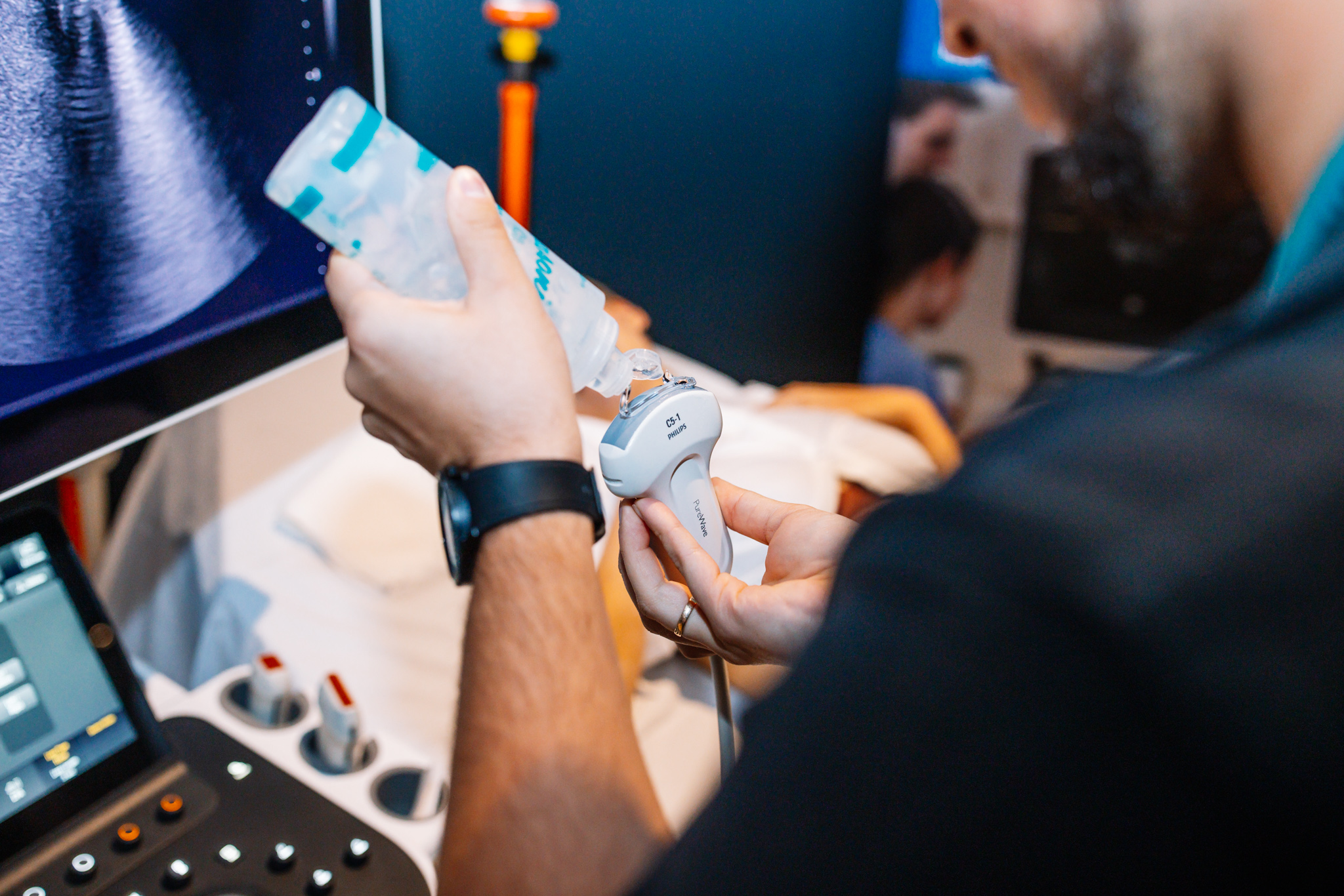
Ultrasound is technologically complex, but obtaining a quality image and adjusting the display on modern devices is usually simple. In this introductory workshop, participants will learn how to operate the device, the basics of display adjustments, and practice displaying structures with ultrasound.
Ultrasound-Guided Peripheral Venous Access
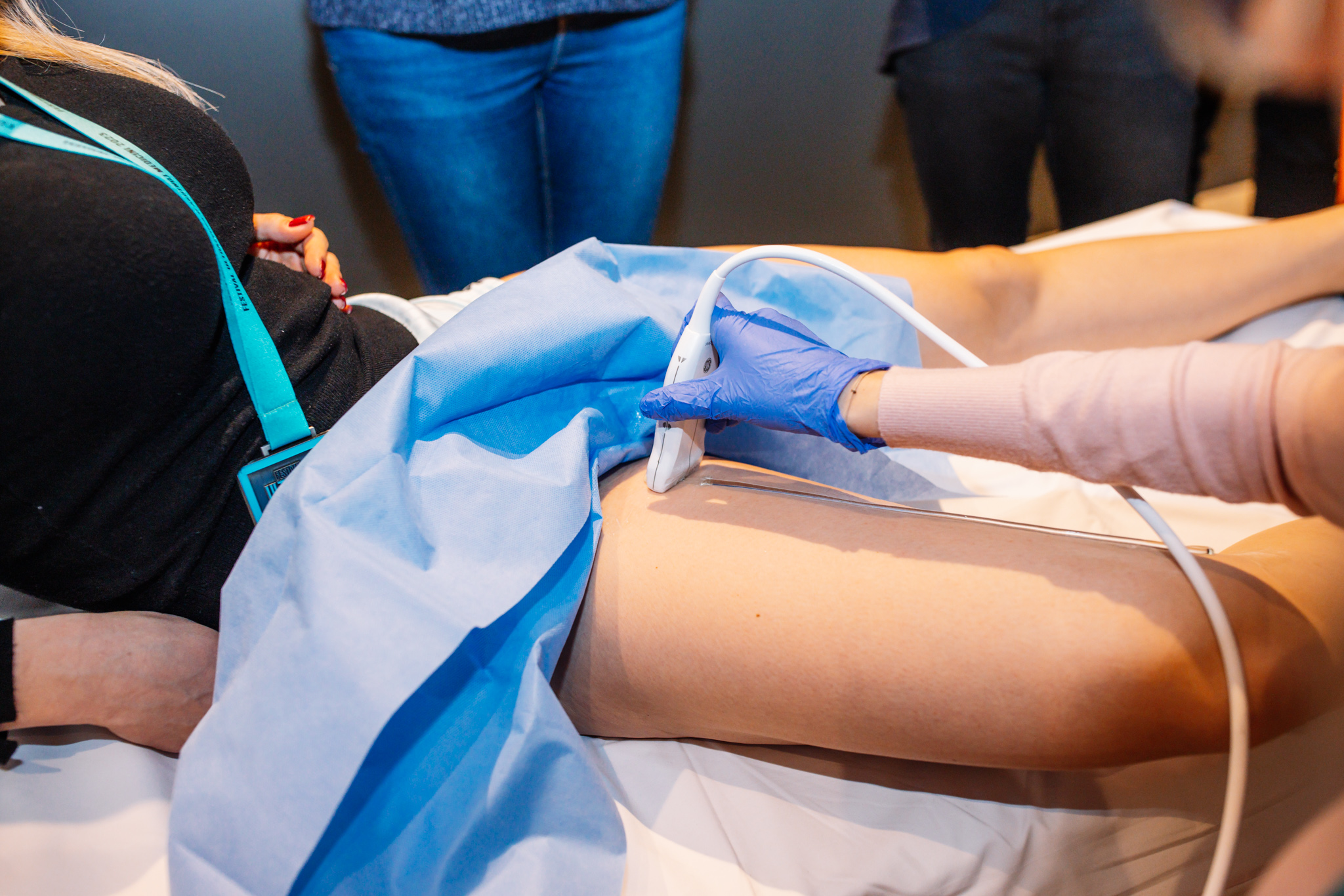
Providing a venous access is one of the basic procedures with a patient in the field and in the hospital. Often, due to the characteristics of the patient and/or his illness, it is not easy to place a venous cannula, regardless of the experience of the performer. Ultrasound can be used to quickly and easily visualize peripheral veins and to insert a cannula into one of them under direct visual control. The method is quick and easy to learn, and can significantly contribute to the quality of care for acute patients.
FAST AND eFAST
FAST (Focused Assessment with Sonography for Trauma) or focused ultrasound examination in trauma is designed to answer the question of whether there is free fluid in the chest and/or abdominal cavity in the context of trauma for the clinician at the bedside. The premise behind using the FAST protocol is that in the event of significant trauma in the chest and/or abdominal cavity, we will find free fluid. eFAST (extended FAST) is an upgrade of the FAST protocol in which we look for free air in the chest. Pneumothorax is one of the significant pathological conditions that are potentially life-threatening for our patient in the context of trauma, and its detection is of great importance in patient care.